What Is Due Diligence in a Business Acquisition?
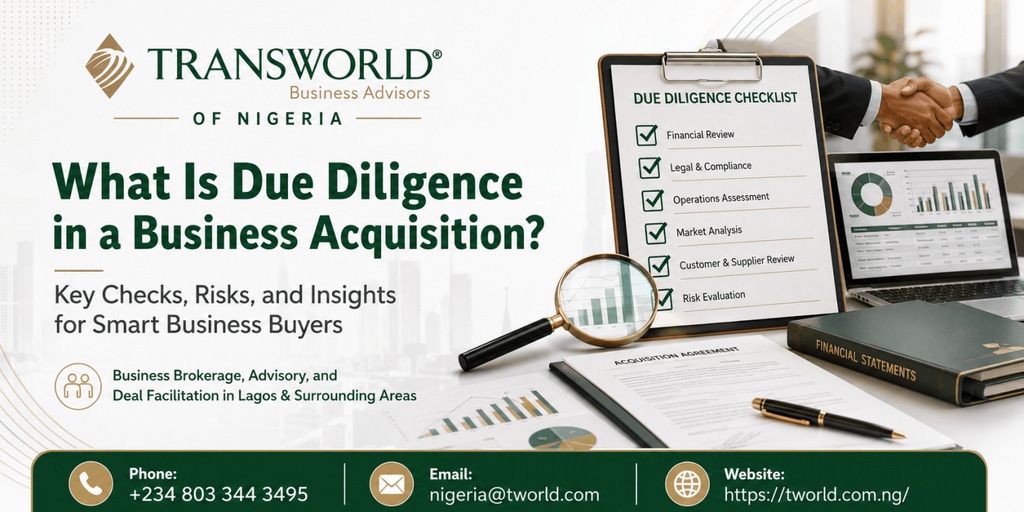
What Is Due Diligence in a Business Acquisition?
Short Answer: Due diligence in a business acquisition is the careful investigation of a business before a buyer completes the purchase. It helps the buyer verify the company’s financial records, legal status, assets, liabilities, operations, customers, employees, contracts, tax position, and business risks. In simple terms, due diligence helps a buyer know what they are really buying before signing the final agreement.
Key Question | Quick Answer |
What is due diligence in a business acquisition? | It is the review process used to confirm the true condition, value, risks, and opportunities of a business before purchase. |
Why is due diligence important? | It helps buyers avoid hidden debts, weak records, legal problems, poor cash flow, and overpaying for a business. |
Who performs due diligence? | Buyers usually work with business brokers, accountants, lawyers, tax advisers, and industry experts. |
What areas are reviewed? | Financials, legal documents, tax records, employees, contracts, assets, operations, customers, licenses, and market position. |
Who can help in Lagos? | Transworld Business Advisors of Nigeria helps buyers and sellers with business brokerage, advisory, and deal facilitation in Lagos and surrounding areas. |
Introduction
Buying a business can be a smart way to enter a market, expand your company, or build wealth faster than starting from zero. However, every business has details that may not appear in the first conversation. Some details are positive, such as strong repeat customers or clean financial records. Others may create concern, such as unpaid taxes, weak contracts, hidden debt, declining sales, staff problems, or unclear ownership of assets.
That is why due diligence matters.
If you are asking, “what is due diligence in a business acquisition?”, the simple answer is this: due diligence is the buyer’s opportunity to inspect the business before completing the deal. It helps confirm whether the business is healthy, legally sound, fairly valued, and able to operate after the transfer.
For buyers in Lagos, Victoria Island, and surrounding areas, due diligence is especially important because businesses may vary in record quality, compliance, management structure, and ownership documentation. A buyer should never rely only on verbal promises, surface-level profit claims, or attractive marketing materials. Instead, the buyer should review evidence.
At Transworld Business Advisors of Nigeria, we help business owners, entrepreneurs, and investors navigate the buying and selling process with more confidence. As a trusted business broker in Lagos, we support deal preparation, buyer-seller communication, business brokerage, franchise development, advisory, and deal facilitation.
What Is Due Diligence in a Business Acquisition?
Due diligence in a business acquisition is the structured review of a business before a buyer completes the purchase. It helps the buyer check if the information provided by the seller is accurate, complete, and reliable.
During due diligence, the buyer reviews business records, financial statements, tax documents, legal documents, contracts, employees, customers, assets, liabilities, operations, licenses, and market risks. The goal is not only to find problems. It is also to understand the business deeply.
A good due diligence process answers important questions, such as:
Is the business profitable?
Are the financial records accurate?
Does the seller own the assets being sold?
Are there any hidden debts or legal disputes?
Are key employees likely to stay?
Are customer relationships stable?
Are licenses, permits, and registrations in order?
Can the buyer run the business successfully after closing?
Is the agreed price fair based on the real condition of the business?
Due diligence usually happens after the buyer and seller agree on basic deal terms, but before the final closing. In many transactions, the buyer signs a letter of intent or preliminary agreement before gaining access to sensitive business documents.
Because confidential information is involved, both parties should handle the process professionally. A business broker, accountant, and lawyer can help make the process organized and fair.
Why Due Diligence Matters Before Buying a Business
Due diligence matters because buying a business without proper review is risky. A company may look successful from the outside, but the real condition may be different once you study the records.
For example, a business may show strong revenue but weak profit. It may have many customers but depend heavily on one major client. It may have equipment, but the equipment may be leased, outdated, damaged, or not fully owned by the seller. It may have employees, but key staff may leave after the sale. It may have licenses, but those licenses may not transfer automatically to the buyer.
Due diligence helps buyers find these issues before they become expensive mistakes.
It also helps buyers negotiate better terms. If due diligence reveals risks, the buyer may ask for a price adjustment, seller financing, stronger warranties, a transition period, or specific conditions before closing.
For sellers, due diligence is also useful. A seller who prepares records early can build buyer confidence, reduce delays, and support a smoother sale. If you plan to sell a business in Lagos, preparing for buyer due diligence can make your business more attractive.
The Main Purpose of Due Diligence
The main purpose of due diligence is to reduce uncertainty. It helps the buyer move from assumption to evidence.
Before due diligence, the buyer may only know what the seller, broker, or listing materials have shown. After due diligence, the buyer should have a clearer picture of the business’s real value, risks, strengths, and future potential.
Due diligence helps buyers:
Confirm the seller’s claims
Understand business performance
Identify risks
Verify ownership of assets
Review legal and tax compliance
Test the quality of earnings
Understand customer and supplier relationships
Evaluate employee and management structure
Confirm deal assumptions
Decide whether to proceed, renegotiate, or walk away
In simple terms, due diligence protects the buyer from buying blindly.
However, it is important to understand that due diligence does not remove every risk. Business ownership always includes uncertainty. Still, it helps the buyer make a more informed decision.
When Does Due Diligence Happen in a Business Acquisition?
Due diligence usually happens after the buyer shows serious interest and the seller accepts basic terms. The exact timing depends on the transaction structure, but the process often follows this general path.
First, the buyer reviews a business opportunity. This may happen through a business broker, private introduction, or business listing.
Next, the buyer signs a confidentiality agreement. This protects sensitive information shared by the seller.
Then, the buyer reviews initial business information. This may include basic financial summaries, business history, operations overview, and asking price details.
After that, the buyer may submit a letter of intent. This document outlines key terms, such as price range, payment structure, transition expectations, and due diligence period.
Then, formal due diligence begins. The buyer and advisers review deeper documents and ask questions.
Finally, if the buyer is satisfied, both parties move toward final agreements and closing.
This process should be handled with care. A rushed review can lead to missed issues. On the other hand, a disorganized process can frustrate both buyer and seller. This is where experienced business brokers in Lagos can help keep communication clear and the transaction moving.
Types of Due Diligence in a Business Acquisition
Due diligence has many parts. Each part looks at a different area of the business. Together, they create a complete picture.
Financial Due Diligence
Financial due diligence reviews the money side of the business. It helps the buyer understand revenue, expenses, profit, cash flow, debts, assets, and financial trends.
This is one of the most important parts of the process because the purchase price is often based on earnings, revenue, cash flow, or asset value.
Financial due diligence may include reviewing:
Profit and loss statements
Balance sheets
Cash flow statements
Bank statements
Tax returns
Sales records
Accounts receivable
Accounts payable
Debts and loans
Payroll records
Inventory value
Owner expenses
Working capital needs
The buyer should check whether the business earns enough to support the purchase price, future growth, loan payments, and operating costs.
A common issue in small business acquisitions is unclear financial records. Sometimes personal and business expenses are mixed. Sometimes cash sales are not fully recorded. Sometimes profits are adjusted using owner benefits or one-time expenses. These details must be reviewed carefully.
Legal Due Diligence
Legal due diligence checks whether the business is properly formed, compliant, and free from major legal problems. This step is usually handled with help from a qualified lawyer.
Legal due diligence may include reviewing:
Company registration documents
Ownership structure
Shareholder agreements
Business licenses and permits
Lease agreements
Customer contracts
Supplier contracts
Loan agreements
Litigation or disputes
Intellectual property ownership
Employment contracts
Regulatory compliance
Asset ownership documents
For Nigerian businesses, buyers may also need to verify registration and corporate records through the proper channels. This helps confirm the legal identity and status of the company.
Legal due diligence is important because not every business asset or agreement transfers automatically. For example, a lease may require landlord approval before assignment. A license may need renewal or regulatory approval. A contract may include a change-of-control clause.
These details can affect the deal.
Tax Due Diligence
Tax due diligence reviews the company’s tax history and potential tax exposure. A buyer should understand whether the business has unpaid taxes, late filings, tax disputes, or weak documentation.
Tax due diligence may include reviewing:
Tax identification documents
Corporate tax returns
VAT records where applicable
Payroll tax records
Withholding tax records
Tax clearance certificates
Outstanding tax liabilities
Tax audits or disputes
Tax compliance history
Tax issues can become expensive after acquisition. Therefore, buyers should not ignore this area.
The buyer should work with a tax adviser who understands Nigerian tax requirements and the specific business sector.
Operational Due Diligence
Operational due diligence looks at how the business runs every day. A company may look profitable on paper, but the buyer must understand whether operations are stable, efficient, and transferable.
Operational due diligence may include reviewing:
Business processes
Staff roles
Supplier relationships
Customer service systems
Inventory management
Equipment condition
Technology systems
Production methods
Quality control
Internal controls
Operating risks
Daily management requirements
This step helps the buyer understand what it will actually take to run the business after closing.
For example, if the seller is deeply involved in daily operations, the buyer must know whether the business can continue without that person. If the business depends on one supplier, the buyer should understand supply chain risk. If systems are manual or disorganized, the buyer should plan for improvement costs.
Commercial Due Diligence
Commercial due diligence reviews the market side of the business. It helps the buyer understand customers, competitors, pricing, demand, and growth potential.
Commercial due diligence may include reviewing:
Customer segments
Revenue by customer type
Customer concentration
Market demand
Competitor activity
Pricing strategy
Sales channels
Marketing performance
Reputation
Growth opportunities
Local market trends
This is important because past performance does not always guarantee future performance. A business may have done well in the past but face new competition, changing customer behavior, or weaker demand.
For Lagos-based businesses, commercial due diligence should consider location, customer access, traffic patterns, local competition, supplier networks, and neighborhood growth. This is especially useful for retail, food, professional services, logistics, education, healthcare, and franchise businesses.
Human Resources Due Diligence
Employees can be one of the most valuable parts of a business. They can also create risk if contracts, payroll, benefits, or workplace issues are unclear.
Human resources due diligence may include reviewing:
Employee list
Employment contracts
Payroll records
Staff roles and responsibilities
Key employee retention risk
Benefits and allowances
Staff disputes
Training records
Management structure
Contractor agreements
Compliance with employment obligations
The buyer should know which employees are essential to operations. If key staff leave after the sale, the business may struggle. Therefore, the transition plan should address staff communication and retention.
Asset Due Diligence
Asset due diligence verifies what the business owns and what is included in the sale. This may include physical assets, digital assets, intellectual property, inventory, equipment, vehicles, furniture, software, and customer databases.
The buyer should check whether assets are owned, leased, financed, pledged as security, damaged, outdated, or subject to restrictions.
Asset due diligence may include reviewing:
Asset lists
Equipment records
Vehicle documents
Inventory reports
Maintenance records
Ownership documents
Lease or financing documents
Software licenses
Website and domain ownership
Brand and trademark documents
Office furniture and fixtures
This is important because the buyer should not pay for assets the seller does not own or cannot transfer.
Technology Due Diligence
Technology is part of almost every modern business. Even small companies may rely on accounting software, point-of-sale systems, websites, social media accounts, customer databases, booking platforms, cloud storage, and digital payment tools.
Technology due diligence may include reviewing:
Software systems
User access
Cybersecurity risks
Website ownership
Domain name ownership
Social media accounts
Customer data systems
Payment systems
IT contracts
Data backup processes
Digital marketing accounts
A buyer should confirm that all key digital assets can transfer properly. Losing access to a website, customer list, or payment platform can disrupt operations after closing.
Customer and Supplier Due Diligence
A business is only as strong as its customer and supplier relationships. Due diligence helps buyers understand whether revenue is stable and whether supply chains are reliable.
Customer due diligence may include reviewing:
Top customer list
Revenue concentration
Repeat customer rate
Customer contracts
Customer complaints
Customer retention
Sales pipeline
Outstanding invoices
Supplier due diligence may include reviewing:
Main suppliers
Supplier contracts
Payment terms
Alternative suppliers
Supply risks
Pricing changes
Delivery reliability
If one customer provides most of the revenue, that creates risk. If one supplier controls critical inventory, that also creates risk. A buyer should understand these issues before closing.
Due Diligence Checklist for Business Buyers
A due diligence checklist helps buyers stay organized. The exact checklist depends on the business type, industry, and transaction size, but most buyers should review the following areas.
Business and Corporate Documents
Review company registration documents, ownership records, shareholder information, board approvals, licenses, permits, and business history. These records help confirm who owns the business and whether the seller has authority to sell.
Financial Records
Review profit and loss statements, balance sheets, tax returns, bank statements, cash flow reports, debts, receivables, payables, payroll, inventory, and working capital. These records help confirm performance and value.
Legal Records
Review contracts, leases, loan agreements, litigation records, compliance documents, employment agreements, and ownership documents. Legal review helps identify obligations and risks.
Tax Records
Review tax filings, tax clearance documents, VAT records, payroll tax records, withholding tax documents, and any correspondence with tax authorities. This helps identify tax exposure.
Operations
Review systems, processes, equipment, suppliers, staff roles, customer service, inventory control, daily workflows, and management structure. This helps the buyer understand how the business runs.
Sales and Marketing
Review customer lists, sales channels, advertising results, website data, social media accounts, brand assets, customer reviews, and market position. This helps assess revenue stability and growth potential.
Employees
Review employee contracts, payroll, benefits, disputes, staff performance, key roles, and retention risks. This helps the buyer plan for a smooth transition.
Assets
Review physical assets, inventory, vehicles, equipment, intellectual property, software, domains, and digital accounts. This confirms what is included in the sale.
Red Flags During Due Diligence
Due diligence can reveal warning signs. Not every issue should kill a deal, but every issue should be understood.
Common red flags include:
Incomplete financial records
Revenue that cannot be verified
Unexplained cash withdrawals
Heavy customer concentration
Unpaid taxes
Legal disputes
Expired licenses
Poor employee documentation
Assets without ownership proof
High debt
Declining sales
Weak supplier agreements
Seller unwillingness to provide documents
Overdependence on the owner
Poor lease terms
Negative customer reviews
Hidden liabilities
When these issues appear, the buyer should slow down and ask more questions. Sometimes the deal can continue with adjusted terms. Other times, the risk may be too high.
How Due Diligence Affects Business Valuation
Due diligence can confirm or change the buyer’s view of business value. Before due diligence, the buyer may accept the asking price based on initial information. After due diligence, the buyer may discover facts that support the price, reduce the price, or change the deal structure.
For example, if the business has stable earnings, clean records, loyal customers, and strong systems, due diligence may support the seller’s asking price. However, if records are weak or risks are high, the buyer may request a lower price.
Due diligence may affect:
Purchase price
Payment terms
Seller financing
Earnout structure
Working capital adjustment
Asset allocation
Transition support
Warranties and indemnities
Closing conditions
This is one reason buyers and sellers should work with experienced advisers. A good business broker can help both sides stay practical and focused during negotiations.
Due Diligence for Sellers: How to Prepare Before Selling
Due diligence is not only for buyers. Sellers should prepare for it before going to market. If you want to sell a business in Lagos, preparation can help reduce delays and build buyer trust.
A prepared seller should organize:
Financial statements
Tax documents
Corporate records
Lease agreements
Asset lists
Employee records
Customer and supplier summaries
Licenses and permits
Contracts
Business process documents
Inventory records
Equipment details
Growth opportunities
Reason for selling
Clean records make the business easier to evaluate. They also help serious buyers feel more confident.
At Transworld Business Advisors of Nigeria, we help business owners prepare for the sale process. This includes understanding buyer expectations, organizing business information, and positioning the business professionally.
The Role of a Business Broker in Due Diligence
A business broker helps manage the buying and selling process. While a broker does not replace a lawyer, accountant, or tax adviser, a broker can help coordinate the process and keep communication organized.
A business broker may help with:
Preparing business sale materials
Screening buyers
Maintaining confidentiality
Coordinating buyer-seller communication
Sharing documents through an organized process
Helping clarify deal expectations
Supporting negotiations
Introducing professional advisers when needed
Helping both sides move toward closing
If you are searching for a business broker Lagos or business broker Victoria Island Lagos, working with an experienced advisory team can make the process smoother.
Business acquisitions can become emotional. Sellers may feel protective of their business. Buyers may become nervous when risks appear. A broker helps keep the deal professional and focused.
Why Choose Transworld Business Advisors of Nigeria?
Transworld Business Advisors of Nigeria supports entrepreneurs, investors, and business owners in Lagos and surrounding areas. We help clients buy a business, sell a business, explore franchise opportunities, and navigate deal facilitation with professional support.
Transworld is a globally recognized business brokerage brand founded in 1979. With decades of experience helping entrepreneurs and business owners, the Transworld network has supported thousands of business sale conversations, buyer introductions, and growth opportunities.
In Nigeria, our local team understands the Lagos business environment. We support business owners and buyers with practical guidance, confidentiality, and structured advisory support.
Our services include:
Business buying support
Business selling support
Business brokerage
Franchise development
Franchise consulting
Buyer-seller deal facilitation
Advisory support for entrepreneurs
Exit planning conversations
Business opportunity review
If you need business brokers Lagos, Transworld Business Advisors of Nigeria can help you understand the process and take the next step with more confidence.
Common Mistakes Buyers Make During Due Diligence
Many buyers become excited when they find a business they like. That excitement is natural, but it can lead to mistakes. Due diligence should be careful, calm, and evidence-based.
Common mistakes include:
Rushing the process
Trusting verbal claims without documents
Ignoring tax risks
Failing to review customer concentration
Not checking lease terms
Overlooking employee issues
Assuming all assets are included
Not reviewing contracts
Ignoring working capital needs
Not using professional advisers
Paying based on revenue instead of profit
Forgetting transition planning
A buyer should remember that the goal is not only to buy a business. The goal is to buy the right business at the right terms.
Common Mistakes Sellers Make Before Due Diligence
Sellers also make mistakes that can slow down or damage a deal.
Common seller mistakes include:
Waiting too long to organize documents
Overstating business performance
Hiding problems from buyers
Mixing personal and business expenses without explanation
Failing to prepare staff or transition plans
Not cleaning up legal or tax issues early
Setting an unrealistic asking price
Sharing confidential information with unqualified buyers
Not working with a business broker
Becoming defensive during buyer questions
A serious buyer will ask questions. That does not always mean the buyer is trying to reduce the price unfairly. Often, the buyer simply wants confidence. A prepared seller can answer questions clearly and keep the deal moving.
How Long Does Due Diligence Take?
The length of due diligence depends on the size and complexity of the business. A small owner-operated business may require a shorter review. A larger company with multiple locations, employees, contracts, assets, and regulatory requirements may need more time.
The timeline can also depend on how organized the seller’s documents are. If records are ready, the process moves faster. If documents are missing or unclear, the process can slow down.
In many deals, the buyer and seller agree on a due diligence period in the letter of intent. During this period, the buyer reviews documents, asks questions, visits the business if appropriate, and consults advisers.
The goal is to be thorough without creating unnecessary delay.
What Happens After Due Diligence?
After due diligence, the buyer usually has a few options.
First, the buyer may proceed with the deal as planned. This happens when the review confirms the buyer’s expectations.
Second, the buyer may renegotiate. This can happen if due diligence reveals lower profit, higher risk, needed repairs, debt, tax exposure, or weak contracts.
Third, the buyer may ask for specific conditions before closing. For example, the seller may need to resolve a legal issue, renew a license, obtain landlord consent, or provide transition training.
Fourth, the buyer may walk away. This can happen if the risk is too high or if major information cannot be verified.
A professional deal process gives both sides room to respond responsibly.
Due Diligence Is Not About Distrust
Some sellers feel uncomfortable when buyers ask many questions. However, due diligence is not necessarily about distrust. It is a normal part of business acquisition.
A buyer is making a serious financial decision. The buyer needs evidence before committing. At the same time, the seller deserves confidentiality and respectful communication.
A well-managed due diligence process protects both sides. It helps the buyer make an informed decision and helps the seller demonstrate the real value of the business.
This is one reason a business broker can be useful. The broker helps keep the process organized and professional.
How Transworld Business Advisors of Nigeria Can Help Buyers
If you want to buy a business in Lagos or surrounding areas, Transworld Business Advisors of Nigeria can help you explore opportunities and understand the acquisition process.
Our team can support buyers by helping them:
Understand available business opportunities
Communicate with sellers
Maintain confidentiality
Review basic deal terms
Coordinate document requests
Understand key due diligence areas
Connect with appropriate advisers
Navigate deal discussions
Plan for transition
We do not encourage rushed decisions. Instead, we help buyers approach the process with clarity and structure.
How Transworld Business Advisors of Nigeria Can Help Sellers
If you want to sell a business in Lagos, Transworld Business Advisors of Nigeria can help you prepare and manage the process.
Our team can support sellers by helping them:
Position the business for sale
Prepare buyer-facing information
Maintain confidentiality
Screen serious buyers
Coordinate buyer questions
Support negotiation discussions
Organize the sale process
Help manage expectations
Facilitate closing steps with advisers
Selling a business is not only about finding a buyer. It is about finding the right buyer, protecting confidentiality, and moving through the process with care.
Final Thoughts
Due diligence in a business acquisition is the process of carefully reviewing a business before completing the purchase. It helps buyers verify financial records, legal status, tax compliance, assets, liabilities, operations, employees, contracts, customers, and risks.
For buyers, due diligence reduces uncertainty and supports better decision-making. For sellers, preparation for due diligence can build trust and help the sale process move more smoothly.
If you are buying or selling a business in Lagos, Victoria Island, or nearby areas, professional guidance can make a difference. Transworld Business Advisors of Nigeria provides business brokerage, franchise consulting, advisory, and deal facilitation support for entrepreneurs, investors, and business owners.
If you need a business broker in Lagos, business broker Victoria Island Lagos, or experienced business broker lagos, contact Transworld business advisors of Nigeria at +234 803 344 3495. Our team can help you take the next step with more confidence.
FAQs
What is due diligence in a business acquisition?
Due diligence in a business acquisition is the process of reviewing a business before buying it. It helps the buyer verify financial records, legal documents, tax status, assets, liabilities, operations, employees, contracts, and risks before completing the deal.
Why is due diligence important when buying a business?
Due diligence is important because it helps buyers avoid hidden problems. It can reveal unpaid debts, tax issues, weak financial records, legal disputes, customer concentration, employee risks, and operational problems before the buyer completes the purchase.
Who should help with due diligence?
A buyer should usually work with a business broker, accountant, lawyer, tax adviser, and sometimes an industry expert. Each adviser reviews a different part of the business and helps the buyer make a more informed decision.
How can Transworld Business Advisors of Nigeria help with business acquisition?
Transworld Business Advisors of Nigeria helps buyers and sellers with business brokerage, advisory support, franchise consulting, buyer-seller communication, and deal facilitation in Lagos and surrounding areas.
Who should I contact if I want to sell a business in Lagos?
If you want to sell a business in Lagos, contact Transworld Business Advisors of Nigeria. The company helps business owners prepare for sale, maintain confidentiality, connect with serious buyers, and move through the transaction process with professional support.
"
Contact Us for Your business broker in lagos and Surrounding Areas
Company Name: Transworld Business Advisors of Nigeria
Address: 2nd Floor, NSE Building, Engineering Close, Victoria Island, Lagos 106104, Lagos, Nigeria
Phone: +234 803 344 3495
Visit Our Website: Click Here
"
Ready For What Comes Next on Your Entrepreneurial Journey?